Municipal, borehole or rain tank? What your water source needs
South African homes drink from three very different sources, and each one asks something different of a filter. Here's what your water picks up on its way to you, and the sensible setup for each.
5 min read
Why the source matters more than the filter
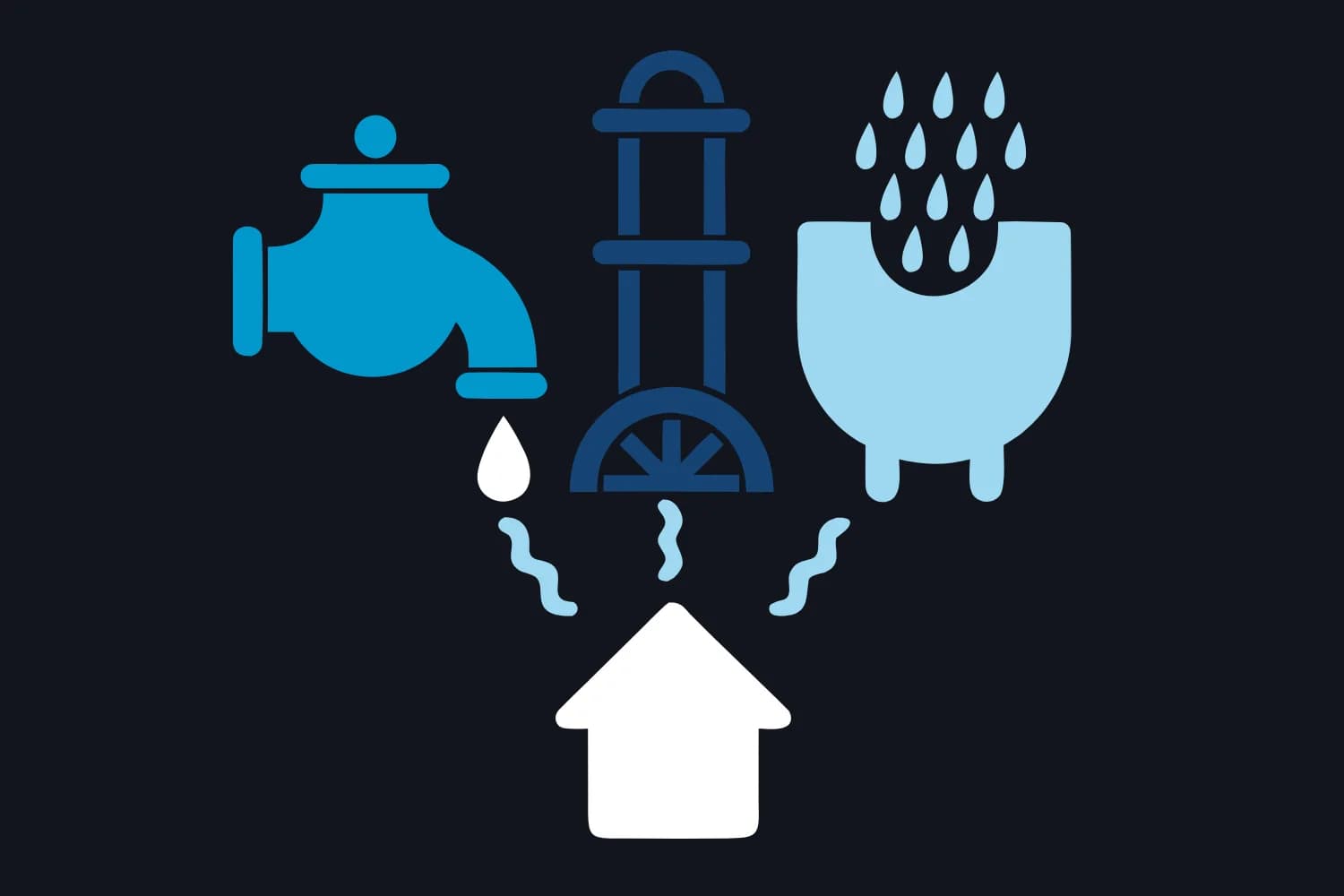
Water is a bit like a traveller: it arrives carrying souvenirs from wherever it's been. Municipal water has been through a treatment works and many kilometres of pipe. Borehole water has soaked through layers of underground rock. Rainwater has rolled off your roof and sat in a tank. Three journeys, three very different sets of souvenirs.
That's why there is no single 'best' water filter. The right setup depends almost entirely on which journey your water took. Once you know what your source typically carries, choosing a filter stops being guesswork.
Municipal water: safe, but well-travelled
If your water comes from a well-run municipality, the hard work of making it safe has already been done. In South Africa that 'well-run' is worth checking rather than assuming: the national Blue Drop audits put a large minority of systems outside the low-risk band, and our town-by-town guide shows how to look up your own supplier. To keep treated water safe on the long trip to your house, chlorine is added — a disinfectant that does an important job but can leave a swimming-pool taste and smell behind.
The pipes themselves add the second souvenir. Older municipal networks shed fine rust and sediment, which is why your water sometimes runs brown for a while after repairs in the street.
The fix is refreshingly simple: a sediment filter to catch the particles, followed by a carbon filter, which works like a sponge that soaks up chlorine and the compounds behind off tastes and smells. A three-stage whole-house system covers every tap, shower and appliance in one go. If you only care about drinking water, a filter at the kitchen sink covers that one tap. Where the supply is well run and arrives properly disinfected, you generally don't need anything more. If your municipality's audit results are poor, or your area has an active water advisory, treat the tap more like an untrusted source: a fine ultrafiltration membrane or a disinfection step stops being a luxury and becomes a sensible precaution.
Borehole water: test first, treat second
Borehole water has been filtered slowly through rock, which sounds wonderful — and often is. But the same rock that filters it also dissolves into it. Depending on where you live, borehole water can carry fine sediment, iron that stains baths and laundry, hardness (dissolved minerals that leave white scale in your kettle), and sometimes bacteria. Perfectly clear borehole water can still hold all four.
So the golden rule is: test before you treat. A water test from a lab tells you exactly what's in your borehole, which means you buy the treatment you need and skip the treatment you don't.
For most boreholes, the sensible stack starts with a sediment ladder: two or three sediment filters going from coarse to fine, like sieves stacked from wide holes to narrow ones, so the cheap first filter catches the big particles and the fine one isn't overwhelmed. Sediment cartridges come in ratings from 50 micron down to 1 micron; the lower the number, the finer the particles it catches. Add a carbon stage if there are any tastes or smells, and finish with a UV steriliser: a chamber with an ultraviolet lamp that inactivates bacteria and viruses without adding any chemicals or changing the taste, provided it is sized to your flow and fed clear, filtered water. One honest caveat: a UV lamp only works while it has power, so water drawn mid-load-shedding passes through untreated.
If your test shows significant iron or hardness, those need their own dedicated treatment beyond a standard filter stack. That's a case where it's worth asking for advice rather than guessing.
Rain tank water: soft and lovely, with two catches
Rainwater is naturally soft and very low in minerals, because it never touched the rock that gives borehole water its hardness. It can be beautiful water to live with. But it comes with two catches.
The first is your roof. Dust, leaves, insects and bird droppings all wash into the tank with the first rain, and once organic material sits in stored water, bacteria can grow. So a rain tank needs the full defence: sediment filters for the debris, carbon for any tastes and odours, and a UV steriliser as the final stage to deal with the microorganisms. And the borehole rule applies here too: have tank water lab-tested before you rely on it for drinking, so the treatment matches the test rather than the brochure. Our rainwater guide covers the full setup, first-flush diverters included.
The second catch is stranger: rainwater's very purity tends to make it slightly corrosive. With almost no dissolved minerals of its own, it behaves like 'hungry' water, slowly nibbling at copper pipes, taps and geyser elements. Where a pH test confirms the acidity, the answer is a calcite remineralising cartridge: a stage filled with natural calcium mineral that the water dissolves a little of as it passes, taking the edge off its acidity and helping protect your plumbing. That's exactly what the fourth stage in SUPERPURE's 4-Stage Whole House system does.
The short version
Municipal water: a sediment filter plus carbon, either as a three-stage whole-house system for every tap or as a kitchen filter if drinking water is all you're after. Check your own supplier's Blue Drop standing rather than assuming.
Borehole water: test it first. Then a sediment ladder from coarse to fine, carbon for taste, and UV for bacteria, with specialist advice if the test shows iron, hardness or chemical problems.
Rain tank water: test it, then sediment, carbon and UV to deal with the roof's contributions, plus a calcite stage if the pH test shows the water needs it.
Whichever stack fits your home, remember the quiet rule of all filtration: cartridges fill up. Replace each at its stated time or litre limit, whichever comes first (typically every 3 to 6 months for sediment and carbon), and change a UV lamp at least annually: it is rated in hours (8,000), not in how brightly it still glows.
Not sure which setup fits your home and your water source?
Find your filter